Korean Surnames, Common Names and What Their Labels Mean
Korean Surnames, Common Names and What Their Labels Mean
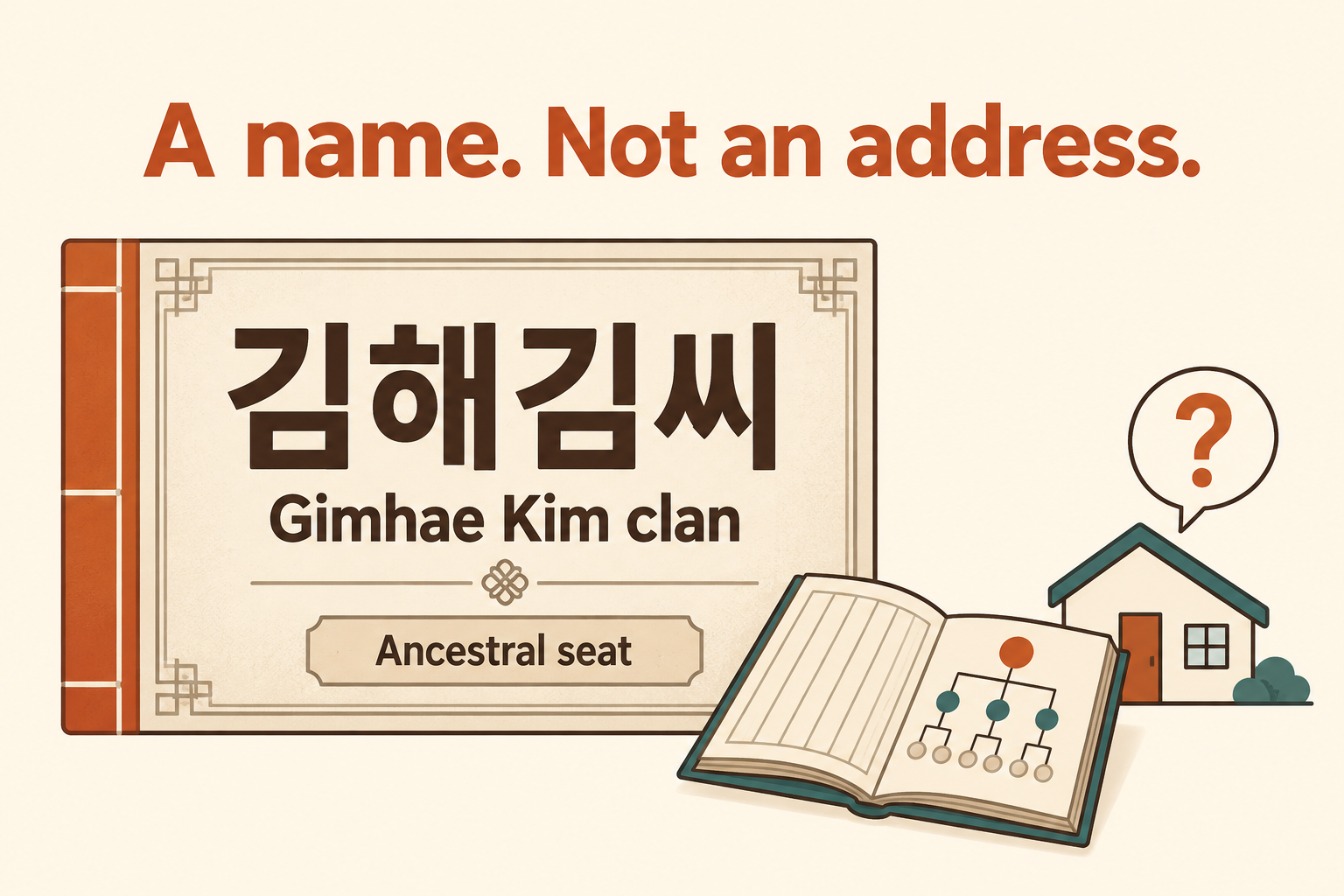
Kim, Lee and Park are the three largest surname groups in the 2015 South Korean census figures below. A family-name character can have a dictionary meaning, but that meaning does not describe its bearer’s personality. A longer label such as 김해김씨 adds clan-seat information rather than a current address.
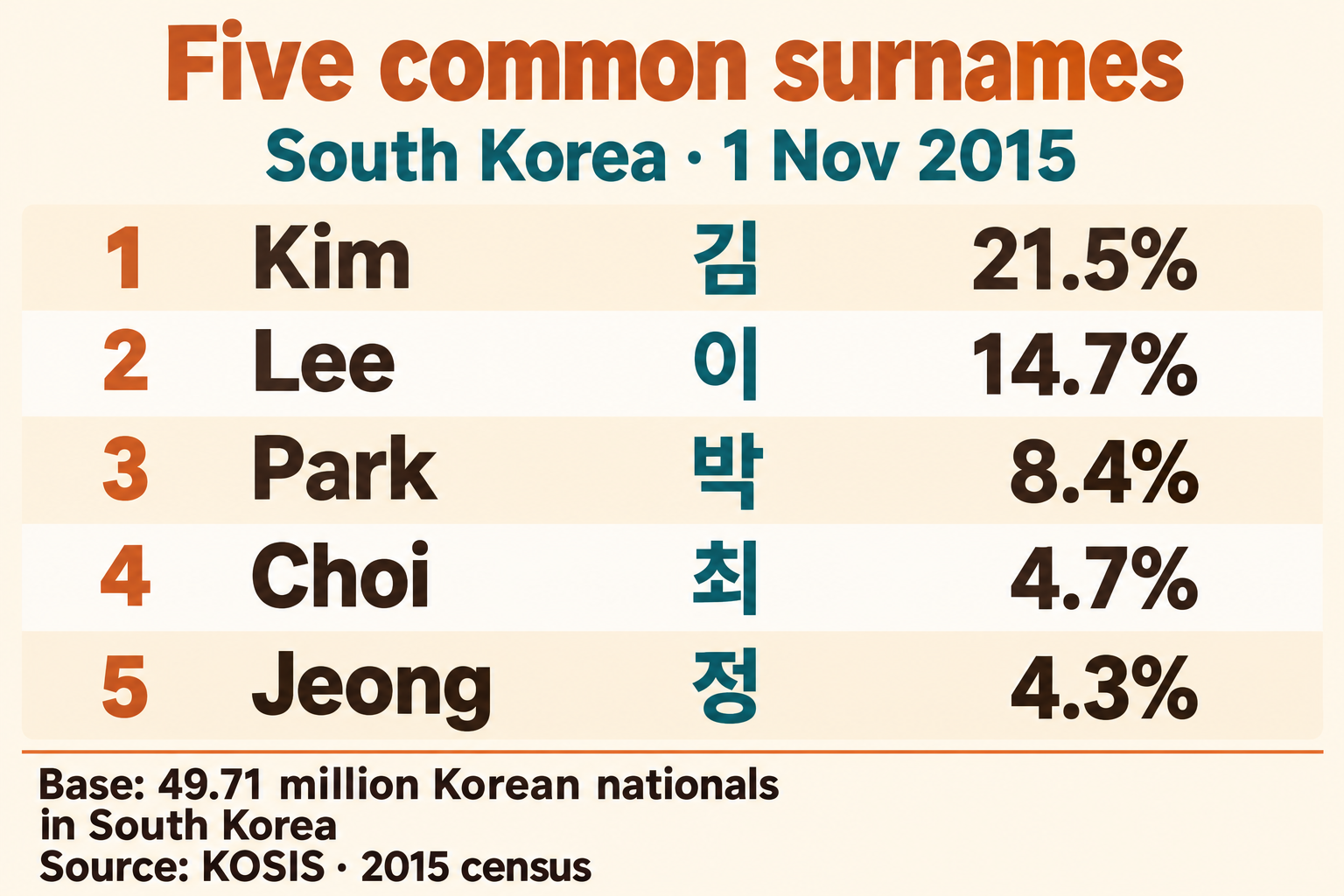
Five common Korean surnames in the 2015 census
KOSIS’s census presentation uses 49.71 million Korean nationals in South Korea as its population base, dated November 1, 2015. These percentages are a dated national snapshot, not current figures or shares of everyone of Korean descent worldwide.
Five largest surname groups in that snapshot
- Surname: Kim
Hangul: 김
Hanja: 金
Share: 21.5% - Surname: Lee
Hangul: 이
Hanja: 李
Share: 14.7% - Surname: Park
Hangul: 박
Hanja: 朴
Share: 8.4% - Surname: Choi
Hangul: 최
Hanja: 崔
Share: 4.7% - Surname: Jeong
Hangul: 정
Hanja: 鄭
Share: 4.3%
Korean surname meanings depend on the character
Tuttle’s introductory Hanja lesson gives these character meanings and identifies their surname readings:
- 金: metal, gold or money; used for the surname Kim.
- 李: plum; used for Lee.
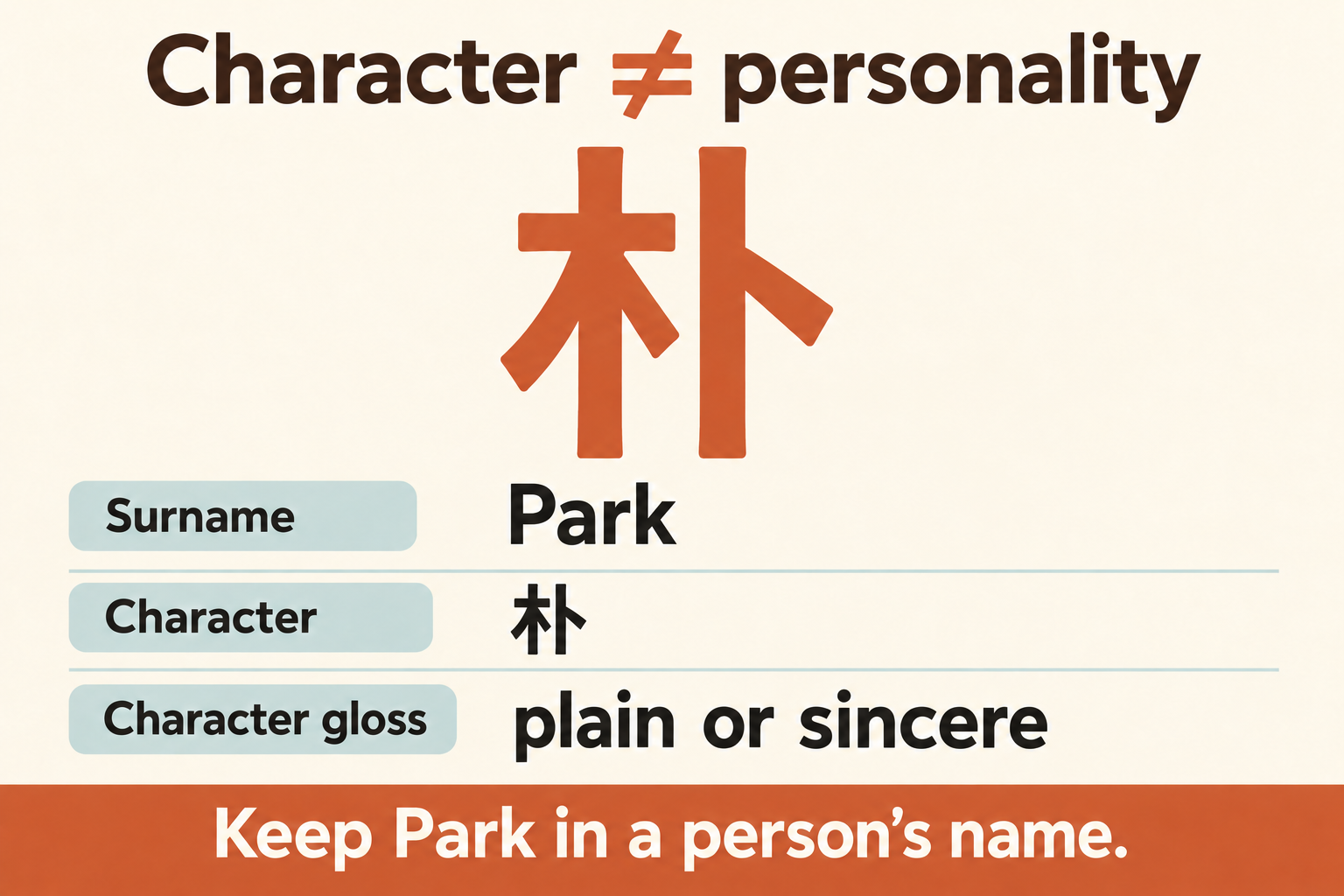
- 朴: plain, sincere or simple; used for Park.
Those are glosses of the written characters. Calling someone Kim does not say that the person is wealthy, and Park is not a character assessment. Keep the family name when translating a person’s name rather than replacing it with Gold or Sincere.
For a vocabulary card, separate three fields: surname: Park, character: 朴, and character gloss: plain or sincere. Putting that gloss under personality would turn a word meaning into an unsupported claim about the person. The character alone also does not explain why a particular family first adopted the name.
The Seoul Museum of History identifies the 李 of Jeonju Lee with the plum tree. It distinguishes that character from 梨, meaning pear. Translating 李 as pear would give it the meaning of a different character.
Why a surname and its clan group cannot be added together
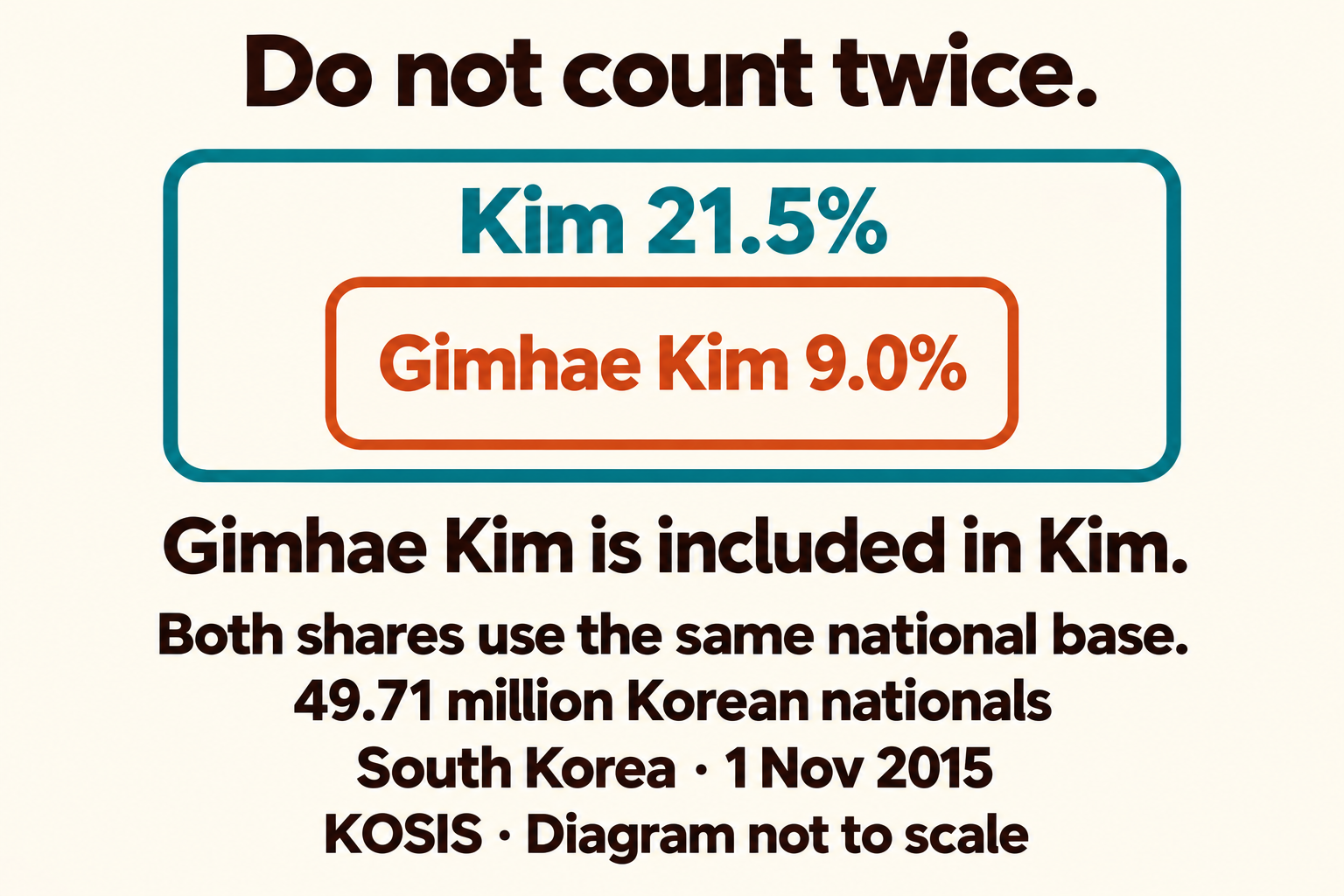
The KOSIS presentation also lists Gimhae Kim at 9.0%, using the same national denominator. That does not mean 9% of people surnamed Kim.
Suppose you add 21.5% and 9.0% to get 30.5% and label the result people named Kim or Gimhae Kim. The addition counts the smaller group twice: Gimhae Kim is already included in Kim. Retain 21.5% for that combined group. Both percentages use the same national population base; one group sits inside the other.
A clan seat is not a residence field
The Academy of Korean Studies encyclopedia’s entry on 본관 describes an ancestral seat associated with a lineage. It also discusses how residence and ancestral seat diverged as people moved. A place in this label is therefore not a present-day address.
Suppose a profile gives two details:
- 김해김씨 — Gimhae Kim clan.
- 서울 거주 — lives in Seoul.
A draft translation says Kim lives in Gimhae and removes Seoul as a contradiction. Repair it to A member of the Gimhae Kim clan who lives in Seoul. The first detail identifies the clan seat; the second supplies the residence. Neither establishes where this person was born.
Now suppose the profile says only 김해김씨 and leaves residence blank. Can the blank be filled with Gimhae? No. Keep the clan label and leave residence unspecified until a separate address statement supplies it.