How to Say Delicious in Korean Beyond 맛있어요

You take a bite of a warm dumpling. 맛있어요—it’s delicious. After a bite of their own, the person beside you nods: 맛있네요. They agree with you after tasting it for themselves.
Start with 맛있어요
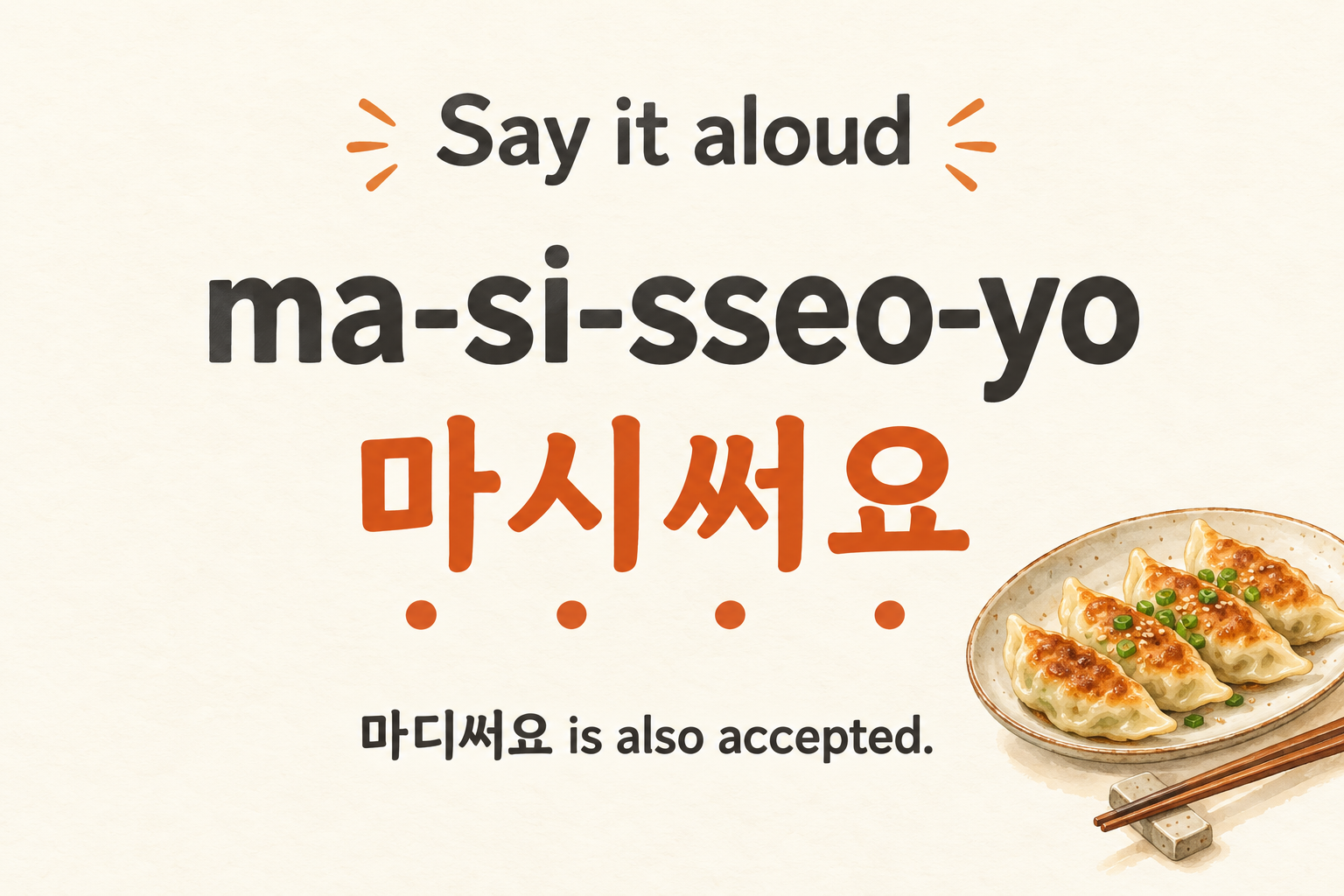
맛있어요 (masisseoyo) means It’s delicious or It tastes good. It is a polite everyday expression you can say to a host or a server. When everyone knows which dish you mean, the phrase works on its own.
For pronunciation, break it into ma-si-sseo-yo: roughly mah-shee-ssuh-yoh. This is an English approximation of 마시써요. You may also hear 마디써요, with a d-like sound in the second syllable; that pronunciation is accepted too.
The dictionary form is 맛있다, the Korean word for delicious. It is also how you say tasty in Korean. In a conversation, the ending changes to suit the sentence and the person you are speaking to.
Same dumplings, same person: 맛있어요 and 맛있네요
Imagine you are eating with a host you speak to politely. The host asks whether you like the dumplings. You answer:
이거 맛있어요.
Igeo masisseoyo.
This tastes good.
이거 means this. The sentence gives your opinion of the food. It can sound warm and enthusiastic without any change to the ending.
Now picture a slightly different moment at the same table. You taste a dumpling and turn to the same host as the flavor catches your attention:
이거 맛있네요.
Igeo masinneyo.
Oh, this is delicious.
-네요 brings out something the speaker has just noticed or come to appreciate through experience. The oh in the translation suggests that reaction; there is no separate word for it in the example.
You may already know the dish and still react to the taste of today’s serving. The ending does not mean the food is better than expected unless the surrounding conversation supplies that meaning.
Both sentences are polite. Switching to -네요 changes how you present the impression, not how respectfully you address the host. You could use either after a bite: one states the compliment directly; the other conveys a fresh reaction to the taste.

When the conversation is casual or more formal
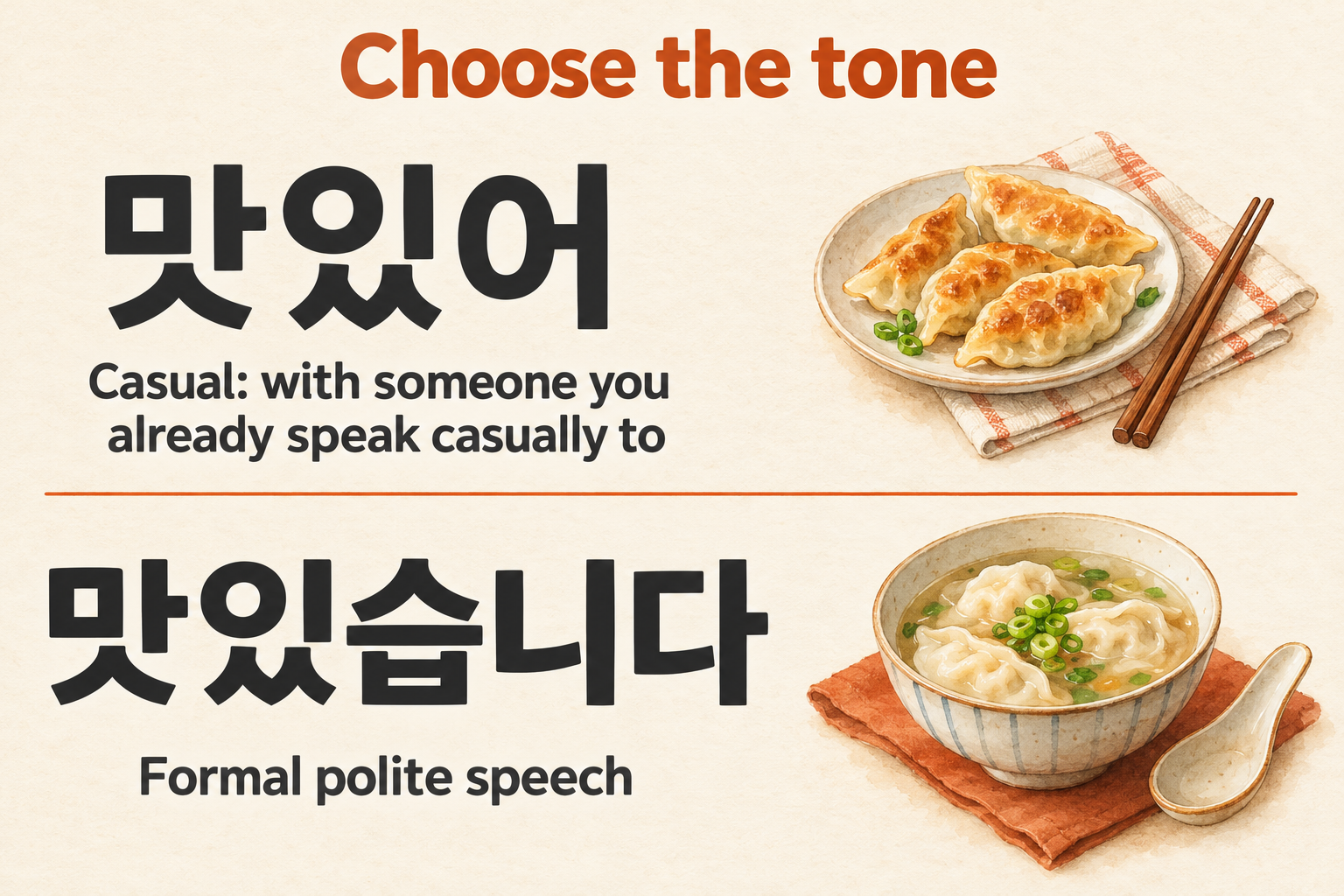
With a friend you already speak casually to, you can say 맛있어 (masisseo)—It tastes good. Dropping 요 changes the speech level. Keep the 요 form when casual speech has not been established.
맛있습니다 expresses the compliment in a formal polite style. 맛있어요 is already polite enough for an ordinary exchange with a server or host; being in a restaurant does not by itself require the formal version.
From a spoken compliment to a food caption
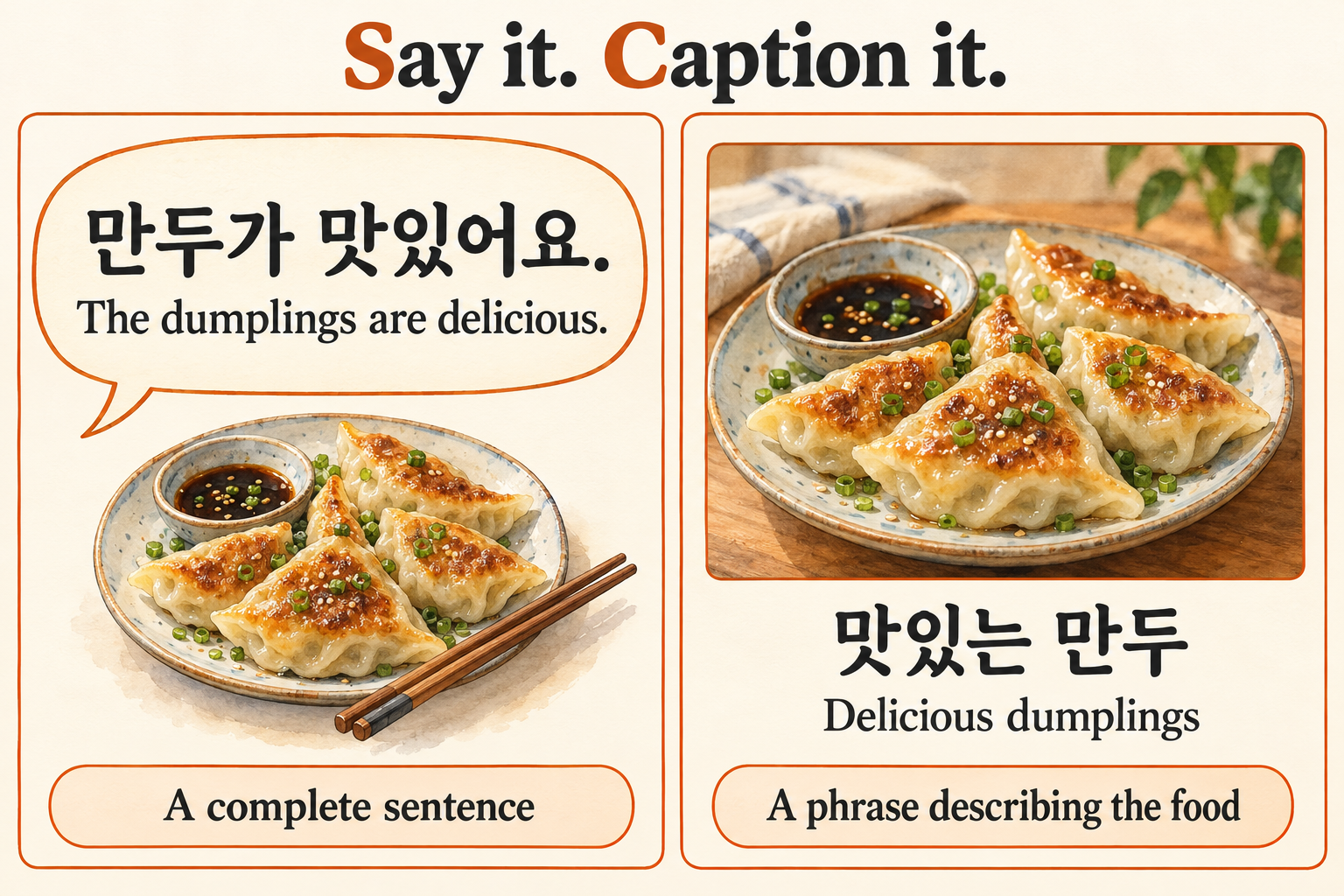
Back at the table, you can name the dish in a complete sentence:
만두가 맛있어요.
The dumplings are delicious.
만두 means dumplings. Here the sentence says something about them: they taste good.
A short caption under a photo can take a different shape:
맛있는 만두
Delicious dumplings
맛있는 describes the noun that follows it. With this word, the dictionary ending -다 changes to -는 before a noun. The result names the food rather than making a complete statement about its taste.
The same change works with a drink: 커피가 맛있어요 says the coffee tastes good. Under a café photo, 맛있는 커피 simply labels it delicious coffee.
'Real Korean Language & Everyday Korea' 카테고리의 다른 글
| Sino Korean Numbers in Writing From 1 to 1000 (0) | 2026.10.28 |
|---|---|
| Aigoo Meaning, What 아이고 Adds to a Korean Sentence (0) | 2026.10.28 |
| Sunbae Meaning in Korean, Senior to Whom? (0) | 2026.10.28 |
| Korean Keyboard, Find the Keys and Build Your First Words (0) | 2026.10.28 |
| Beautiful in Korean: 예쁘다, 아름답다, and What Each One Can Describe (0) | 2026.09.30 |
| Happy Birthday in Korean: Why 생일 Changes to 생신 (0) | 2026.09.26 |
| My Name Is in Korean: 제 이름은, 저는, or (이)라고 합니다? (0) | 2026.09.22 |
| Nice to Meet You in Korean: 만나서 반갑습니다, 반가워요, or 처음 뵙겠습니다? (0) | 2026.09.21 |


