Maknae Meaning: Who Is Youngest and What the Label Says
What Does Maknae Mean in Korean?
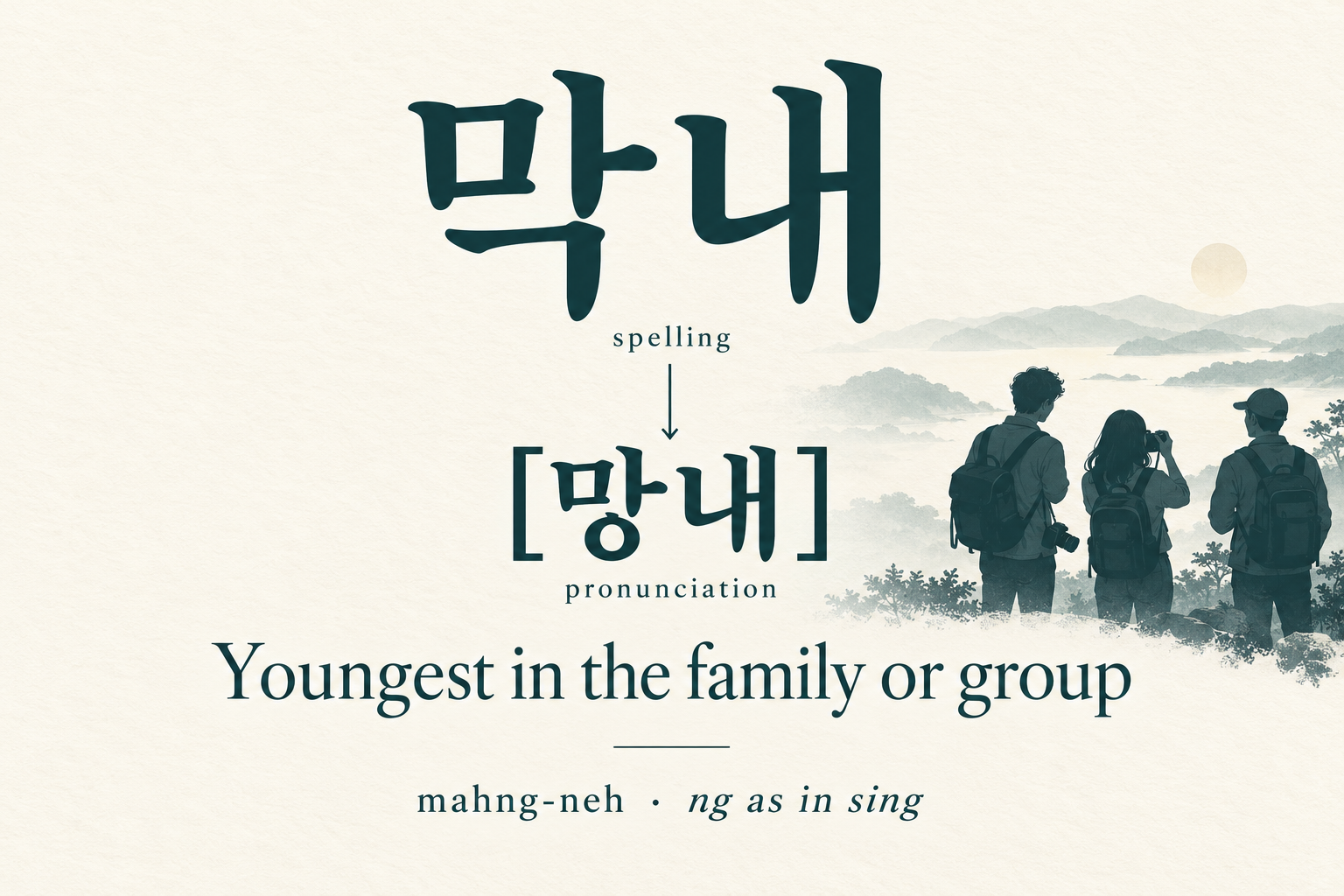
If you watch Korean entertainment or follow conversations about Korean families, you may have come across the word maknae (막내). It is often translated as “the youngest,” but the word has a more specific role in Korean everyday language. It identifies the youngest person within a particular family, group, or organization.
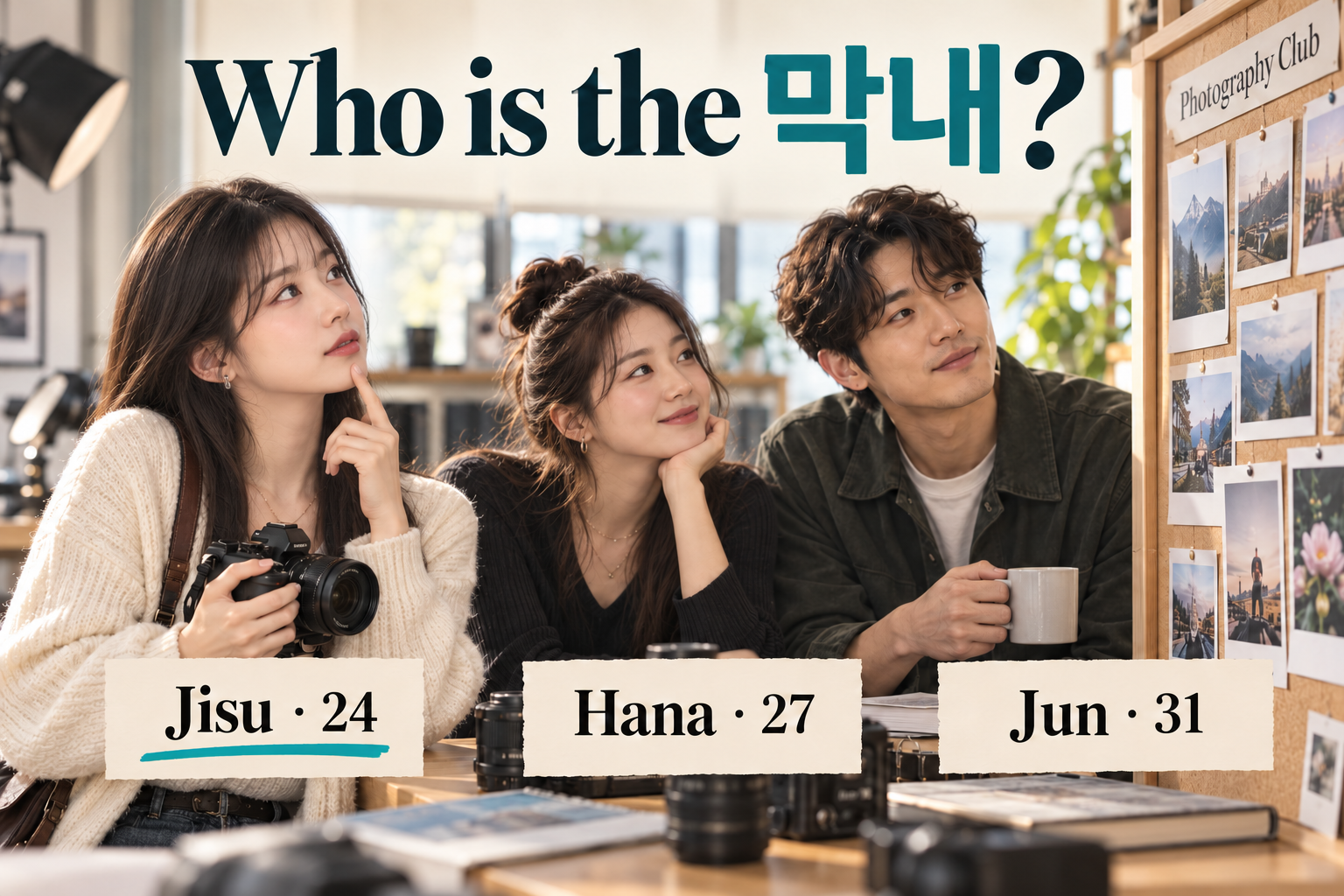
The important detail is the group being discussed. Someone can be the youngest child in their family, the youngest employee in a department, or the youngest person among a circle of friends. The person does not need to be the youngest individual in an entire company or community. The label depends on the people being compared.
Understanding maknae meaning therefore requires two questions: Who belongs to the group, and who is the youngest within it? Once you identify those two things, the meaning becomes much easier to follow.
Maknae in a Family: The Youngest Child
In a family, 막내 refers to the youngest child among siblings. For example, imagine a family with three children: an older sister, an older brother, and a younger sister. The younger sister is the maknae because she was born last and is the youngest of the three.
Here are some useful expressions:
- 우리 집 막내 — The youngest in our family.
- 막내 동생 — The youngest younger sibling.
- 막내로 태어나다 — To be born as the youngest child.
- 막내를 키우다 — To raise the youngest child.
Consider this sentence:
저는 삼 남매 중 막내예요.
“I am the youngest of three siblings.”
The expression 삼 남매 refers to three siblings. 중 means among, and 막내 identifies the youngest person within that sibling group. The sentence does not describe the speaker as the youngest person in every group they belong to. It specifically describes their position among their siblings.
There is also a useful distinction between 막내 and 외동. 막내 identifies the youngest person among siblings, while 외동 refers to an only child who has no siblings. If a family has only one child, 외동 is generally the more precise description rather than calling that child the youngest sibling.
Maknae in a Team, Workplace, or Social Group
The word is not limited to families. Korean speakers also use 막내 for the youngest person in an organization, team, department, or social gathering.
For example, imagine a workplace department with five employees of different ages. One employee is younger than everyone else in that department. That employee can be called the 부서 막내, meaning the youngest person in the department.
Other common expressions include:
- 회사 내 막내 — The youngest person in the company.
- 팀 막내 — The youngest member of the team.
- 모임의 막내 — The youngest person in the group or gathering.
- 우리 부서 막내 — The youngest person in our department.
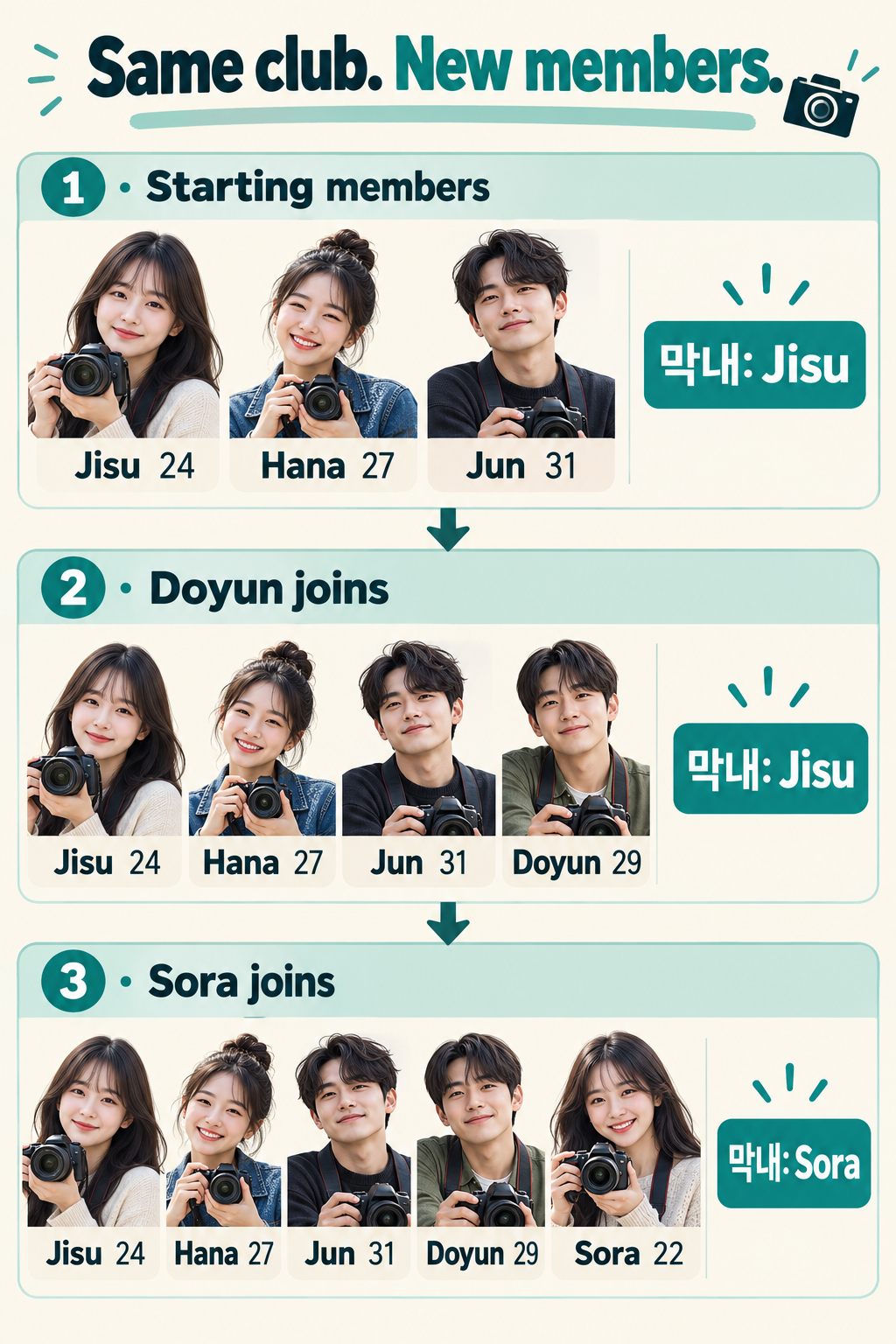
Notice how the group name changes the meaning. If someone is the youngest in one department, they may not be the youngest in the entire company. If a new employee joins that department and is younger, the original person may no longer be its 막내.
For example:
지수가 우리 모임의 막내였어요.
“Jisoo was the youngest in our group.”
더 어린 친구가 들어와서 막내 자리가 바뀌었어요.
“A younger person joined, so the youngest position changed.”
These sentences show that 막내 is a relative position, not a permanent personal identity. It can change when the membership of a group changes.
How the Group Determines Who Is the Maknae
When you encounter this label, do not immediately assume that it refers to a person's family. Look at the surrounding words to identify the relevant group.
| Expression | Reference Group | Meaning |
|---|---|---|
| 가족의 막내 | Family | The youngest family member |
| 삼 남매 중 막내 | Three siblings | The youngest of three siblings |
| 팀 막내 | Team | The youngest team member |
| 회사 내 막내 | Company | The youngest person in the company |
| 모임의 막내 | Social group | The youngest person in the gathering |
The particle and surrounding noun help establish the comparison group. In 가족의 막내, 의 connects the family with the person being described. In 삼 남매 중 막내, 중 means “among,” making the comparison especially clear.
This is why translating 막내 as simply “the youngest” is not always enough. English readers may still need to know: the youngest among whom? Korean often supplies that information through the surrounding expression or the earlier conversation.
What Being the Maknae Says About a Person
Being called the maknae tells you something specific: the person is the youngest member of the group being discussed. It does not automatically tell you what that person is like, what responsibilities they have, or how other people should treat them.
In some families, the youngest child may receive extra attention from older siblings or parents. In some workplaces, the youngest employee may be asked to help with small tasks or learn from more experienced colleagues. These are possible social patterns, not rules built into the word itself.
For example, two people can both be called 막내 but have very different experiences. One may be treated affectionately by older siblings, while another may be expected to handle ordinary responsibilities just like everyone else. The label identifies relative age, not personality or ability.
Does the Maknae Always Have to Do the Smallest Tasks?
No. You may hear stories about the youngest person in a group being asked to bring drinks, arrange items, or help older members. However, these expectations depend on the group's habits and relationships. They are not part of the dictionary meaning of 막내.
Consider these two statements:
우리 팀 막내가 회의 자료를 준비했어요.
“The youngest member of our team prepared the meeting materials.”
우리 팀 막내라서 항상 심부름을 해야 해요.
“Because I am the youngest in our team, I always have to run errands.”
The first sentence simply identifies who prepared the materials. The second adds an expectation about duties. The phrase 막내라서 means “because [someone] is the youngest,” but the obligation comes from the rest of the sentence, not from 막내 alone.
Does Maknae Mean Someone Is Cute, Shy, or Spoiled?
Not necessarily. In entertainment conversations, people sometimes use the label affectionately, especially when talking about a younger member of a group. However, being the youngest does not automatically mean someone is cute, innocent, shy, dependent, or less experienced.
Those descriptions require separate information about the person. Someone can be the youngest in a group and still be confident, independent, responsible, or highly experienced in their work. Do not treat a relative-age label as a personality description.
How to Use Maknae Naturally in Conversation
The easiest way to use the word is to identify the group first. You can then add 막내 to describe the youngest person within it.
Talking about a family member
A: 형제가 몇 명이에요?
“How many siblings do you have?”
B: 저희는 삼 남매예요. 제가 막내예요.
“There are three siblings in my family. I'm the youngest.”
A: 아, 막내군요!
“Oh, so you're the youngest!”
삼 남매 tells the listener that there are three siblings. 제가 막내예요 then identifies the speaker's position among them. The expression does not mean that the speaker is the youngest person in every social group.
Talking about a coworker
A: 우리 부서에서 누가 제일 어려요?
“Who is the youngest in our department?”
B: 지수 씨가 막내예요.
“Jisoo is the youngest.”
A: 그렇군요. 막내라고 일을 더 많이 하는 건 아니죠?
“I see. Being the youngest doesn't mean she has to do more work, right?”
B: 네, 업무는 각자 맡은 역할에 따라 나눠요.
“Right. We divide the work according to each person's responsibilities.”
This conversation distinguishes age from job responsibilities. 지수 씨가 막내예요 identifies Jisoo as the youngest member of the department. The following sentences make it clear that her age does not automatically determine her workload.
Talking about a social group
A: 어제 모임에서 누가 막내였어요?
“Who was the youngest at yesterday's gathering?”
B: 민수가 막내였어요.
“Minsu was the youngest.”
A: 나이가 가장 어렸군요.
“So he was the youngest by age.”
B: 네, 다른 사람들과 편하게 이야기했어요.
“Yes, he talked comfortably with everyone else.”
The word 모임 establishes the group being compared. In this example, Minsu is the youngest among the people who attended that gathering, not necessarily the youngest person in his family or workplace.
Useful Expressions Related to Maknae
These expressions help you describe the youngest person's position without assuming additional characteristics.
| Korean Expression | Meaning | How It Is Used |
|---|---|---|
| 막내 | The youngest member | Names the youngest person in a family or group. |
| 막내 동생 | Youngest younger sibling | Refers to the youngest sibling. |
| 막내로 태어나다 | To be born the youngest | Describes birth order in a family. |
| 막내가 되다 | To become the youngest | Describes becoming the youngest member of a group. |
| 막내 자리 | The youngest position | Refers to the position held by the youngest member. |
| 막내에게 시키다 | To ask the youngest to do something | Describes an action directed toward the youngest person; context determines whether it is reasonable or unfair. |
Maknae Meaning: Common Misunderstandings
Does 막내 always mean the youngest child in a family?
No. It can refer to the youngest person in an organization or social group as well. Look for expressions such as 회사 내, 팀, or 모임의 to identify the relevant group.
Can someone be the maknae in one group but not another?
Yes. A person can be the youngest among their siblings but older than other members of their workplace team. The label changes according to the group being discussed.
Does being the maknae mean someone has fewer responsibilities?
No. The word describes relative age, not a person's workload or authority. Responsibilities depend on the rules and relationships within the group.
Does maknae describe someone's personality?
No. It does not inherently mean cute, shy, spoiled, innocent, or dependent. Those descriptions require separate context and should not be inferred from age alone.
Can a person stop being the maknae?
Yes, in a group context. If a younger person joins the group, the previous youngest member may no longer hold that position. The person's place in the birth sequence does not change, but if a younger sibling is born, they may no longer be the family's 막내.
Remember the Group Before the Label
The central meaning of 막내 is straightforward: it identifies the youngest person within a particular group. In a family, that usually means the youngest child among siblings. In a workplace, team, or social gathering, it means the youngest person among the members being discussed.
The most important habit is to identify the comparison group before interpreting the label. Once you know whether the conversation is about a family, department, team, or gathering, the meaning becomes clear.
Most importantly, remember that being the maknae does not automatically define someone's personality, duties, or status. It describes their age in relation to a group. The rest of the story comes from the context.
'Real Korean Language & Everyday Korea' 카테고리의 다른 글
| How to Say Cheers in Korean and Make a Short Toast (0) | 2026.11.09 |
|---|---|
| No in Korean: 아니요, 아니에요, and 안 돼요 in Full Sentences (0) | 2026.11.07 |
| Korean Table Manners: When to Start and How to Share (0) | 2026.11.06 |
| Jjimjilbang: Where to Change, Meet Up, and Pay for Extras (0) | 2026.11.06 |
| Dad in Korean: Appa, Abeoji, and Using Them in a Sentence (0) | 2026.11.05 |
| Money in Korean: Using 돈 for Cash, Costs, and Payment (0) | 2026.11.04 |
| Excuse Me in Korean: Getting Attention and Asking Your Question (0) | 2026.11.03 |
| Why in Korean: Asking for a Reason and Giving One (0) | 2026.11.03 |


