
On a stationery shelf, 빨간색 can label a color option. Add 공책, meaning notebook, and 빨간색 공책 names a red notebook. The full color name can stay in place while the words around it do a different job.
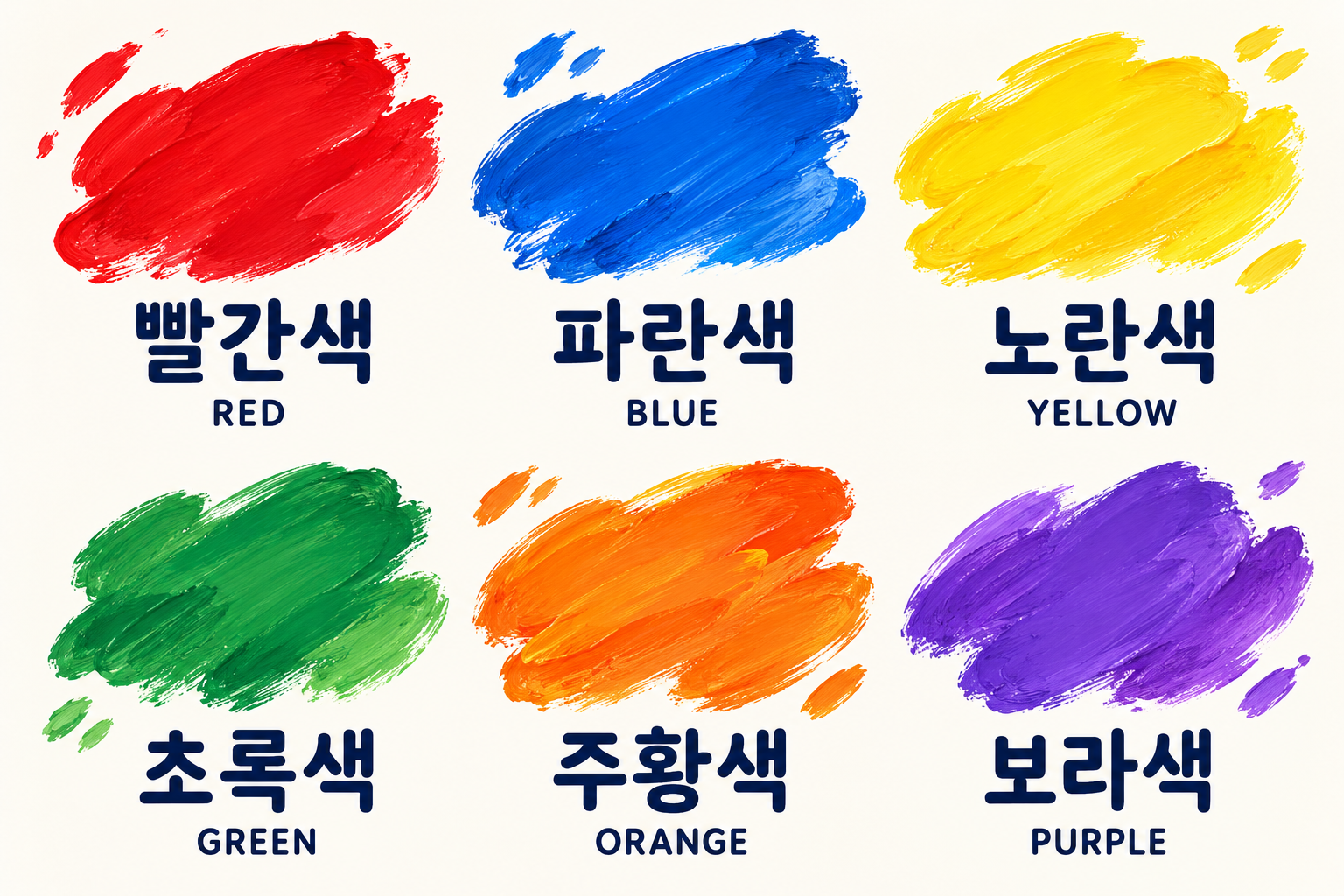
Red in Korean is 빨간색 (ppalgansaek), and blue in Korean is 파란색 (paransaek). Both are nouns. They can name a color by themselves or become part of a longer description.
Eleven color names to start with
색 (saek) and 색깔 (saekkkal) both mean color. These starter words all include 색:
- 빨간색 (ppalgansaek) — red
- 파란색 (paransaek) — blue
- 노란색 (noransaek) — yellow
- 초록색 (choroksaek) — green
- 주황색 (juhwangsaek) — orange
- 보라색 (borasaek) — purple
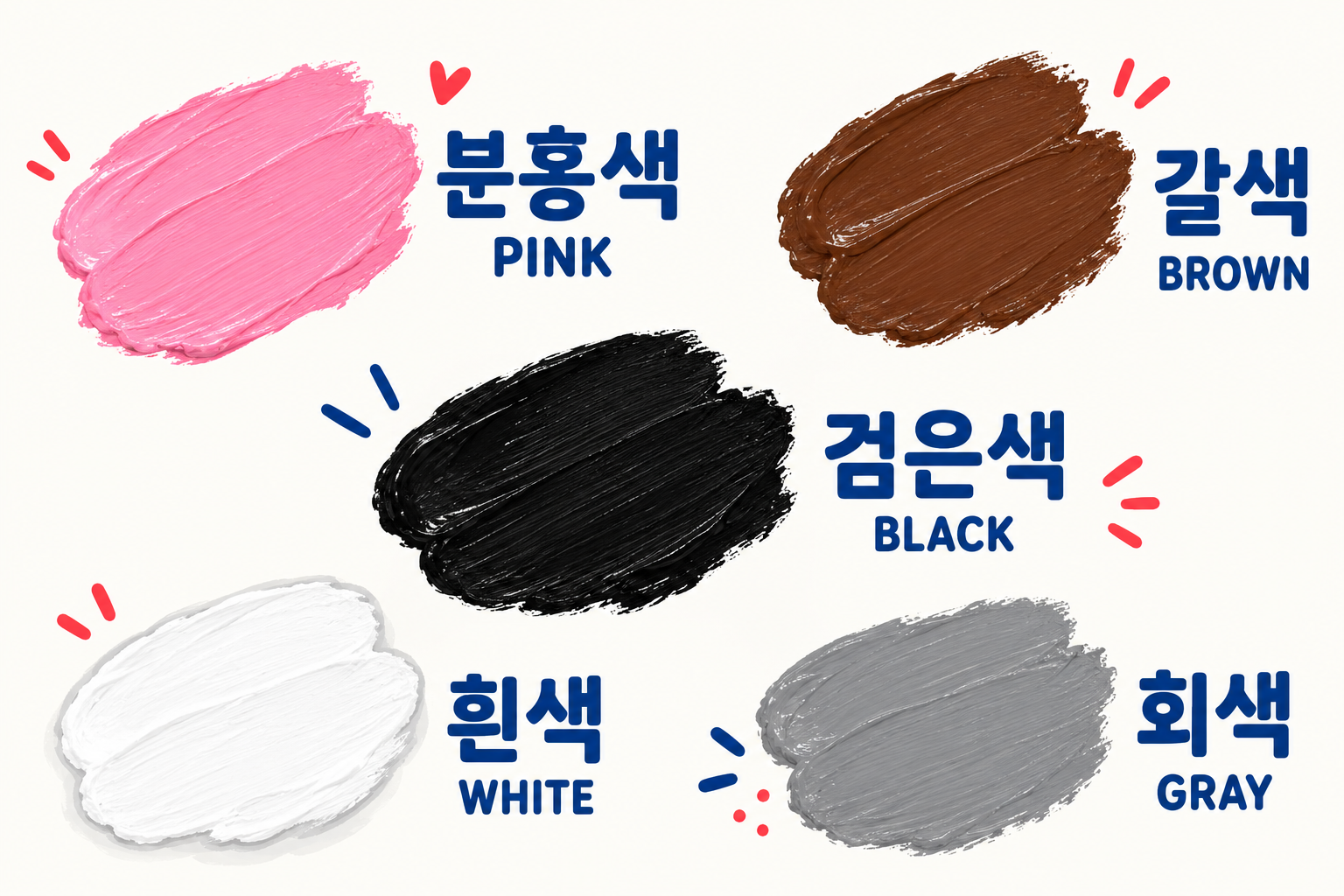
- 분홍색 (bunhongsaek) — pink
- 갈색 (galsaek) — brown
- 검은색 (geomeunsaek) — black
- 흰색 (huinsaek) — white
- 회색 (hoesaek) — gray
You may also see 빨강 (ppalgang) for red and 파랑 (parang) for blue. Those are color nouns too.
Keep the color name when you add an object
A color noun can come before another noun. With 가방, meaning bag, you can write 갈색 가방: a brown bag. With 신발, meaning shoes, you get 회색 신발: gray shoes. Keep the color word intact and leave a space before the object word.
The same construction works with the red notebook: 빨간색 공책. Removing 색 is not a requirement for describing an object. The noun phrase names an item with that color; it does not yet make a complete statement.
To say what color the notebook is, use:
공책은 빨간색이에요.
Gongchaegeun ppalgansaegieyo.
The notebook is red.
Here 공책은 sets the notebook as the topic. 빨간색이에요 supplies the color statement. 이에요 attaches to the color noun without a space. All eleven names in the list end in the consonant ㄱ of 색, so they take 이에요 in this construction.
For a brown bag, the same sentence pattern gives:
가방은 갈색이에요.
Gabangeun galsaegieyo.
The bag is brown.
The full word 갈색 remains visible in both 갈색 가방 and 갈색이에요. What follows it determines whether you have an object phrase or the end of this statement.
Now suppose someone points to an umbrella. Two questions lead to different answers:
무슨 색이에요? — What color is it?
파란색이에요. — It’s blue.
이게 뭐예요? — What is this?
파란색 우산이에요. — It’s a blue umbrella.
In the first answer, 이에요 follows 파란색, the color noun. In the second, it follows 우산, meaning umbrella. The color name stays in front of that object noun. You are now identifying the item as a blue umbrella, rather than giving only its color.
The spacing shows the structure: 파란색 + 이에요, but 파란색 우산 + 이에요. The plus signs show where the parts meet; they are not written in the finished sentences. Adding 이에요 immediately after the color and then placing 우산 after it would not build the noun phrase a blue umbrella.
Red and blue also have adjective forms
Korean has the adjectives 빨갛다 (ppalgata), meaning to be red, and 파랗다 (parata), meaning to be blue. Their forms change with the ending. Before a noun, they become 빨간 and 파란:
- 빨간 공책 — a red notebook
- 파란 우산 — a blue umbrella
These are alternatives to 빨간색 공책 and 파란색 우산. In 빨간 공책, the adjective form directly describes 공책. In 빨간색 공책, the complete color noun describes it. Both phrases can identify the red notebook.
For a polite statement, the adjectives have the forms 빨개요 (ppalgaeyo) and 파래요 (paraeyo). The ㅎ disappears and the vowel changes in these forms; adding 요 to 빨간 or 파란 would not produce them.
공책이 빨개요. — The notebook is red.
우산이 파래요. — The umbrella is blue.
Here the adjective itself finishes the description. It does not need 이에요 after it. The difference between 파래요 and 파란색이에요 is the construction: an adjective form versus a color noun with 이에요. Both are polite.
For a gray umbrella, the color noun already supplies a complete route: 회색 우산 means a gray umbrella, and 우산은 회색이에요 means The umbrella is gray.
'Real Korean Language & Everyday Korea' 카테고리의 다른 글
| Korean Reading Practice: Two Short Stories With Answers Explained (0) | 2026.11.08 |
|---|---|
| Korean Adjectives: From Big and Small to Clear Descriptions (0) | 2026.11.07 |
| No in Korean: 아니요, 아니에요, and 안 돼요 in Full Sentences (0) | 2026.11.07 |
| Korean Table Manners: When to Start and How to Share (0) | 2026.11.06 |
| Jjimjilbang: Where to Change, Meet Up, and Pay for Extras (0) | 2026.11.06 |
| Korean Chopsticks: A Steady Grip and a Bowl of Bibimbap (0) | 2026.11.05 |
| Dad in Korean: Appa, Abeoji, and Using Them in a Sentence (0) | 2026.11.05 |
| Money in Korean: Using 돈 for Cash, Costs, and Payment (0) | 2026.11.04 |


